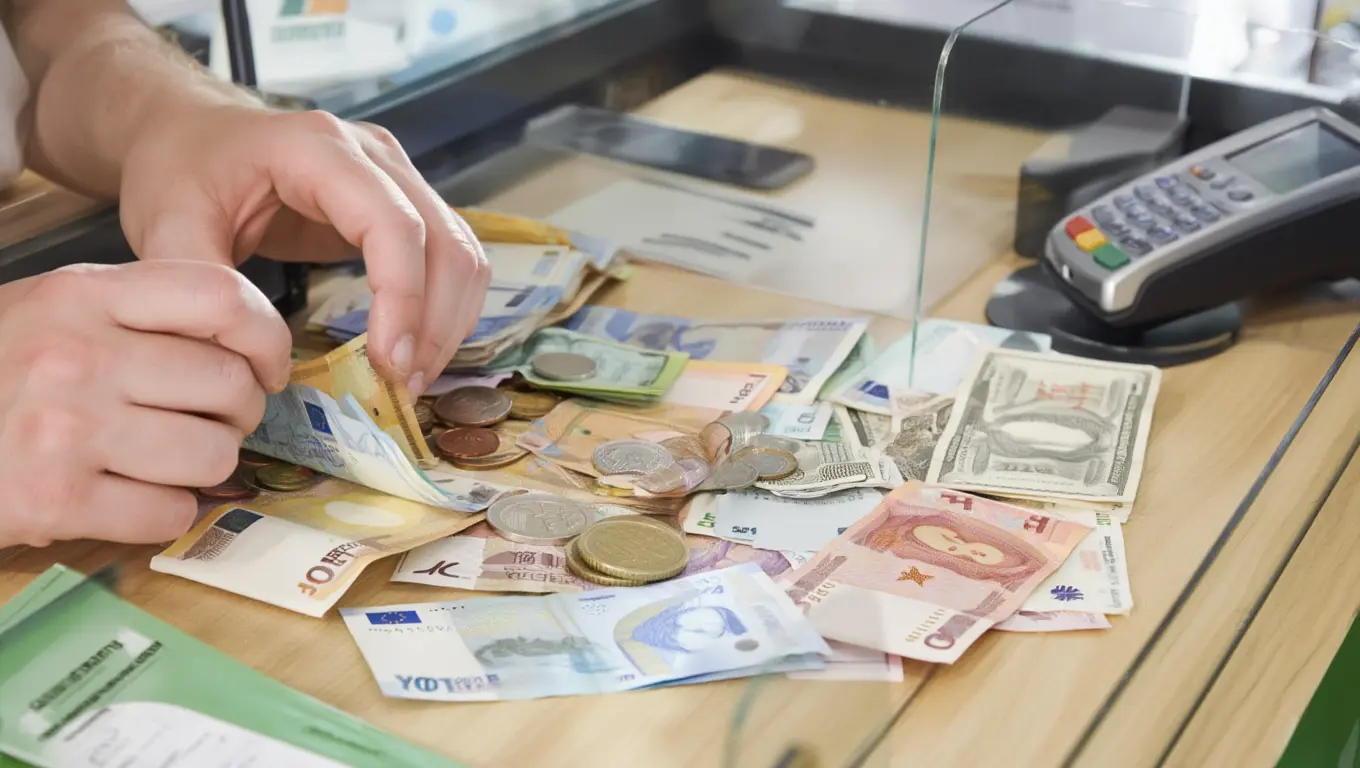
When you are on holiday and you tap your card to pay for dinner or a souvenir, a question pops up on the screen: do you want to pay in the local currency or pounds? It seems like a small decision, but it can actually cost you more money than you think if you choose the wrong option.
The short answer? Always pay in local currency or pounds when abroad and local currency almost always wins. But understanding why that is can help you make smarter money choices every time you travel. Let us break it all down in plain, simple terms.
Why Does the Currency Choice Even Matter?
It comes down to exchange rates. Every time you spend money when abroad, someone has to convert your pounds into the local currency. The question is: who does that conversion and at what rate?
When you pay in local currency, your own bank or card provider handles the conversion. Most banks use a rate that is close to the real market exchange rate, sometimes called the interbank rate. This is usually a fair rate.
You can always check and compare rates before you travel to see how much you could save.
When you pay in pounds while abroad, the conversion is handled by the retailer, the restaurant, or their payment system and not your bank. They almost never offer you a good rate. In fact, they often add a significant margin on top, which means you end up paying more for the same thing without even realising it.
This process has a name: Dynamic Currency Conversion (DCC). It sounds technical, but it simply means the merchant is doing the currency conversion on their end and profiting from it.
What Is Dynamic Currency Conversion (DCC)?
Dynamic Currency Conversion is the system that allows overseas merchants to charge you in your home currency (pounds) instead of the local currency. It is offered at card machines, ATMs, and sometimes even online bookings abroad.
Here is the key thing to understand: DCC is almost always bad for the traveller.
When a merchant offers you the chance to pay in pounds, they are applying their own exchange rate. That rate is typically 3% to 7% worse than what your bank would offer. Some reports have found DCC rates as high as 10% above the mid-market rate.
The European Banking Authority has published guidance warning consumers about the extra costs that come with dynamic currency conversion.
So if you are paying for a 200 euro hotel bill and you choose pounds, you could end up paying the equivalent of 210 to 220 euros, for no reason at all other than choosing the wrong option on the screen.
The best currency option when paying abroad is almost always to decline DCC and pay in the local currency.
Should I Choose Local Currency When Paying Abroad?
Yes. In the vast majority of cases, you should choose the local currency when paying abroad. Here is a simple way to think about it:
Paying in local currency means your bank converts the money, usually at a fair rate.
Paying in pounds means the merchant converts the money, almost always at a poor rate.
Even if your bank charges a small non-sterling transaction fee (more on that below), the rate difference from DCC is usually larger than that fee. So you are still better off paying in local currency in most situations.
The only exception might be if you have a travel card or a specialist card with zero foreign transaction fees. Even then, paying in local currency is still generally the safer and cheaper choice.
What Fees Can Your Card Charge when You are Abroad?
It is important to understand what your card might charge when you use it overseas. Here are the most common fees:
Non-Sterling Transaction Fee
This is a fee your UK bank or card provider charges when you make a payment in a foreign currency. It is sometimes called a foreign transaction fee or overseas usage fee. It is typically between 1% and 3% of the transaction amount.
For example, if your card charges 2.99% and you spend £500 on holiday, you could pay nearly £15 in fees across your trip. These fees add up quickly if you are making lots of smaller payments.
Cash Withdrawal Fee
If you use your debit or credit card to take money out of a cash machine when abroad, your bank may charge a cash withdrawal fee. This can be a flat fee like £1.50 or £3, or a percentage of the amount withdrawn.
Some banks charge both a flat fee and a percentage. Always check your card's terms before you travel so you are not caught off guard.
Credit Card Interest
If you are using a credit card and you do not pay off your balance in full at the end of the month, interest charges will apply. Some credit cards also charge interest on cash withdrawals from day one, with no interest-free period.
What Happens at an ATM in Abroad?
The same DCC trap applies at ATMs. When you put your card into a cash machine while abroad, it may ask whether you want to withdraw money in the local currency or in pounds. Again, choosing pounds means the ATM operator sets the exchange rate and it will not be in your favour.
Always choose to withdraw in the local currency at foreign ATMs. If the machine asks you to confirm the exchange rate it is offering and the rate looks poor, you can cancel the transaction and try a different machine.
Some ATMs, particularly those in airports, tourist hotspots, and hotel lobbies, are known for offering very bad exchange rates. If possible, use ATMs that are attached to local banks, as these tend to offer better rates.
Best Currency Option When Paying Abroad: A Quick Summary
Here is a simple guide to help you choose the best currency option when paying abroad:
- At a card machine in a shop, restaurant, or hotel: Choose the local currency. Decline any offer to pay in pounds.
- At an ATM abroad: Withdraw in the local currency. Say no to the option to convert to pounds.
- Online bookings for hotels or activities abroad: If given a choice, pay in the local currency where possible.
- If you have a travel-specific card, still choose the local currency; you'll also benefit from lower or zero transaction fees.
How to Save Even More Money When Spending Abroad
Beyond choosing the right currency, there are several other ways to keep your holiday spending costs down.
1. Use a Travel-Friendly Card
Some debit and credit cards are designed specifically for use when abroad. These cards typically charge no foreign transaction fees and offer competitive exchange rates. If you travel regularly, it is worth getting one of these cards before your next trip.
Look for cards that offer fee-free spending while abroad and fee-free ATM withdrawals. Read the small print carefully, as some cards are fee-free for spending but still charge for cash withdrawals.
2. Buy Travel Money Before You Go
One of the most reliable ways to pay in local currency or home currency in abroad without worrying about exchange rates is to carry cash. If you order your travel money before you leave the UK, you can lock in a good rate and avoid paying card fees altogether while you are away.
Cash is also useful in places that do not accept cards, for tipping, or in markets and smaller local businesses.
3. Consider a Prepaid Travel Card
A prepaid travel card lets you load money onto the card before your trip at a set exchange rate. You then spend from that balance while abroad, so you always know what you have and what rate you got.
Multi-currency prepaid cards are especially useful if you are visiting multiple countries, as you can load several currencies onto one card.
Just be aware that prepaid cards are not covered by the Financial Services Compensation Scheme (FSCS), unlike money held in a UK bank account.
4. Avoid Airport Currency Exchange
Airport currency exchange desks and kiosks are well known for offering very poor exchange rates. If you need cash for your trip, order it in advance from a reputable provider rather than buying it at the airport.
5. Always Check Your Bank's Charges First
Before you travel, take five minutes to check what fees your bank or card provider charges for overseas use. Look for foreign transaction fees, non-sterling fees, ATM withdrawal fees, and any daily spending limits abroad.
Knowing this in advance means no nasty surprises on your bank statement when you get home.
Should I Pay in Pounds when Abroad at All?
In almost every situation, no. You should not choose to pay in pounds when you are abroad. Paying in pounds hands control of the exchange rate to the merchant or ATM operator, and they will almost always give you a worse deal than your own bank would.
There is no real benefit to paying in pounds when abroad. Even if you feel more comfortable seeing a pound figure on the screen, the actual cost to your account will be higher than if you had paid in the local currency.
The only time paying in pounds might be worth considering is if your card has an extremely high foreign transaction fee and the merchant is offering a surprisingly competitive DCC rate. But this is very rare. In practice, always default to local currency.
Final Thoughts
The next time you are at a checkout abroad and the card machine asks whether you want to pay in local currency or pounds, you now know exactly what to do. Choose local currency every single time. Decline DCC. And if an ATM tries to convert your withdrawal into pounds, always say no.
These small decisions, made in a matter of seconds, can add up to real savings over a holiday. Combined with using the right card, buying travel money in advance, and checking your bank's fees before you go, you can make sure your budget goes further on every trip.
The golden rule: always pay in local currency or pounds when abroad and local currency is nearly always the smarter choice.