


Turn your trip into a win, before it begins.
Order 50+ currencies at exclusive online rates and collect them the same day in Stratford or Lakeside. Zero commission — the rate you see is the rate you get.
- 0% commission
- Same-day collection
- Buy-back guarantee

Today's rate
1 GBP = 1.1431 EUR
Exclusive online rates — branch rates may differ.
Best Exchange Rates
Get the best currency conversion rates — no commission, no handling fee, no admin charges, and zero hidden costs. What you see is what you get! Long Opening Hours
Open 7 days a week for your convenience! EUR & USD always available — plus 50+ currencies ready to exchange. Find our Westfield Stratford & Lakeside opening hours or drop by via our Google Business page! Excellent Location
Find us at Westfield Stratford, London and Lakeside Shopping Centre, Essex — just steps away from the Tube station and shopping centre entrance! Heading to Stansted Airport ? The bus stop is only 2 minutes away, and you can grab your airport bus tickets from our store.
Why Travel Cashier
Currency exchange without the catch
We do one thing — travel money — which is why our rates beat the banks and our stores never ask you to pre-order.
0% commission
Find more than 50 currencies to order online or head to a store to buy. And all commission-free.
Buyback service
We'll convert your leftover notes into British pounds at the buy back rate of the day.
Competitive rates
We track the wholesale market every day and price against the high street, so your pounds go further.
Today's rates
Live rates on the currencies you travel with
Exclusive online rates, refreshed daily. Larger orders unlock a better tier automatically.
- EUR Euro You buy at 1.1431 You sell at1.2422
- USD United States Dollar You buy at 1.3277 You sell at1.4455
- AED United Arab Emirates Dirham You buy at 4.722 You sell at5.567
- AUD Australian Dollar You buy at 1.8376 You sell at1.9998
- BBD Barbadian Dollar You buy at 2.5588 You sell at2.8993
- BHD Bahraini Dinar You buy at 0.4765 You sell at0.5807
- BRL Brazilian Real You buy at 6.4812 You sell at7.8675
- CAD Canadian Dollar You buy at 1.8175 You sell at2.0257






| Currency | You buy at | You sell at | Order |
|---|---|---|---|
| EUR Euro | 1.1431 | 1.2422 | Order |
| USD United States Dollar | 1.3277 | 1.4455 | Order |
| AED United Arab Emirates Dirham | 4.722 | 5.567 | Order |
| AUD Australian Dollar | 1.8376 | 1.9998 | Order |
| BBD Barbadian Dollar | 2.5588 | 2.8993 | Order |
| BHD Bahraini Dinar | 0.4765 | 0.5807 | Order |
| BRL Brazilian Real | 6.4812 | 7.8675 | Order |
| CAD Canadian Dollar | 1.8175 | 2.0257 | Order |
How we compare
See how our euro rate compares with the high street
Same £1,000, one currency. The gap is what you'd leave behind by exchanging elsewhere.
This comparison is live, checked fresh every time this page loads. Rates move constantly, so treat the gap as indicative.
Compare every providerComparing rates…
How to order
Three steps from order to collection
Reserve your rate online, then walk in and pick up your cash. No pre-order wait, no paperwork.
- 1
Select currency
Add all the currencies required to the basket and fill in your information
- 2
Reserve and confirm
Confirm the collection date and your details — nothing is charged online
- 3
Collect currency
Collect your currencies in-store
Built around your trip
A travel money service that gets out of your way
We've crafted a travel money service that prioritizes your convenience, offering seamless transactions for your global adventures. Benefit from competitive rates, ensuring maximum value for your currency exchanges, all backed by safe, reliable services. Plus, our expert support ensures a hassle-free experience, wherever your travels take you.
Convenient transactions
Reserve online in under a minute and collect the same day. No paperwork, no pre-order wait.
Competitive rates
We check the market daily and publish an online rate built to beat the airport bureaux.
Safe & reliable service
HMRC-supervised and fully compliant, with every note checked before it reaches your hand.
Expert customer support
Talk to people who exchange currency all day — in store, on the phone, or by email.
Customer reviews
Trusted by travellers across London
The cashier was immensely helpful and polite. Thank you!
Ateeb Bin Muzaffar Google The services representatives are exceptional and always willing to assist!
Christine Stevens Google What I liked about Travel Cashier was the calm and professional environment. If you’re looking for a dependable currency exchange service in the Stratford area, this place is worth considering.
Krish Sethi Google
Find us
Two stores, seven days a week
Walk in without an appointment, or reserve online and collect when it suits you.
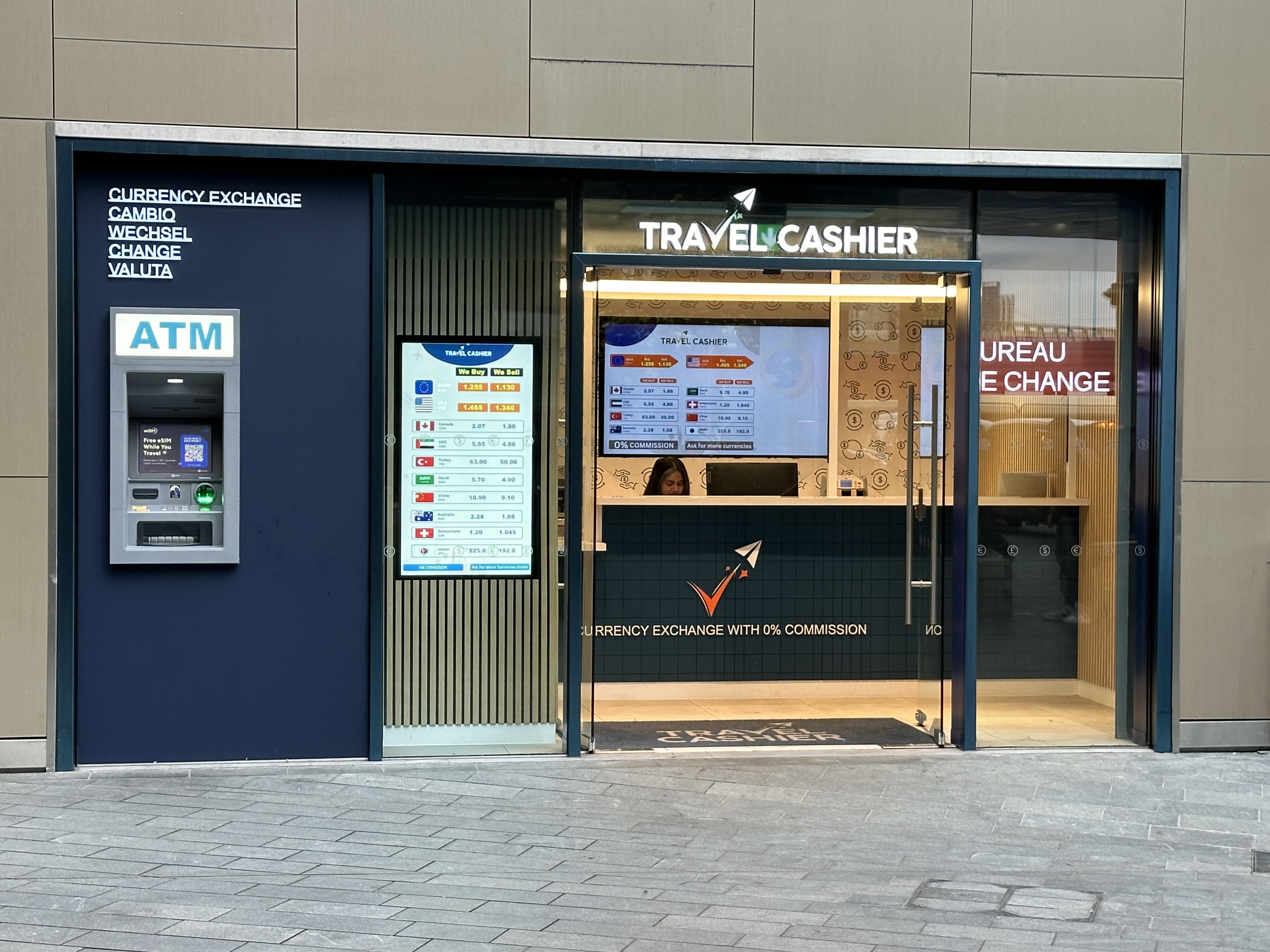
Travel Cashier Westfield Stratford
40A The Arcade
Lower Ground Floor, Westfield stratford city, Opps Tube Station/Mall Entrance, Montfichet Rd
E20 1EHMon–Sat 09:00 – 20:00 · Sun 11:00 – 19:00
- Buy currency
- Sell currency
- Click & Collect
- Money transfer
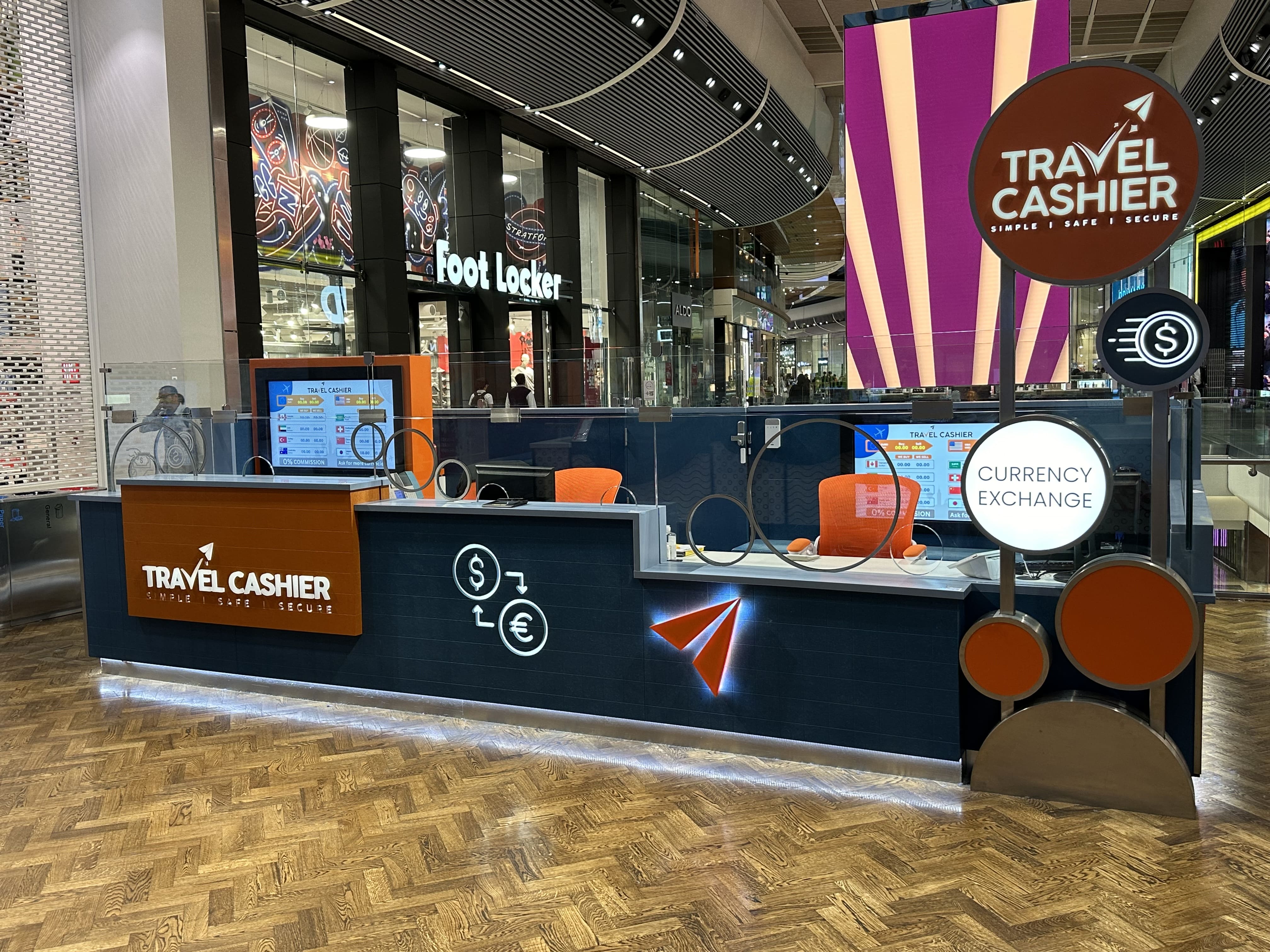
Travel Cashier Lakeside Shopping Centre
Level 2 (Opps Santander Bank)
Lakeside Shopping Centre
RM20 2ZHMon–Thu 10:00 – 21:00 · Fri–Sat 09:00 – 21:00 · Sun 11:00 – 17:00
- Buy currency
- Sell currency
- Click & Collect
- Money transfer
Guides & articles
Know before you go
Destination guides and rate insight from the people who exchange currency all day.
 7 min read How to Avoid Card Fees Abroad: Your Complete Travel Money Guide Introduction: Why Card Fees Abroad Can Cost You More Than You ThinkYou have budgeted carefully for your trip. You know what your hotel costs, what your flights set you back, and roughly how much you p...
 7 min read How Much Does It Cost to Visit Japan? A Complete Budget Breakdown for Travelers (2026 Guide) Introduction: Is Japan an Expensive Country to Visit?Japan has long carried a reputation as one of the more expensive destinations in Asia. But here is the truth: Japan can be as affordable or as luxu...
 6 min read The Complete Guide to Travelling with Cash: Safety Tips, Limits, and Smart Money Strategies Travelling internationally is exciting, but managing your money properly is one of the most important parts of a successful trip. While cards and digital payments are popular, cash is still essential ...
Questions
Everything you might be wondering
Can't find what you need? Our team answers the phone during store hours.
Travel Cashier is a convenient platform for currency exchange, allowing you to convert from one currency to another quickly and securely.
Travel Cashier provides a simple and user-friendly interface for exchanging currencies. You select the currency you want to exchange from and to, enter the amount, and then proceed with the transaction securely. You can choose between modes of receiving cash.
Travel Cashier supports a wide range of currencies, including but not limited to USD, EUR, GBP, AUD, CAD, and JPY. You can check the full list of available currencies here.
Travel Cashier strives to offer competitive rates with no hidden and extra costs. we do not charge any commissions.
At Travel Cashier, we prioritize the security and privacy of our customers personal information. We utilize industry-standard encryption protocols and adhere to strict security measures to safeguard your data.
If you have any questions, concerns, or need assistance with your currency exchange transaction, you can either call us or you can reach out to our dedicated customer support team through our website's contact form, email, or phone. We are here to assist you promptly and efficiently.
Travel Cashier is located inside Westfield Stratford City 45a The Arcade, Lower Ground Floor, Open Tube Entrance, Stratford, London E20 1EJ. We're the only dedicated currency exchange inside the centre, offering 0% commission, rates up to 15% better than the airport, and over 30 currencies always in stock, no pre-order needed. Walk in any day of the week, or use our Click & Collect service to lock in your rate online before you arrive.
Yes and here's why. Travel Cashier was awarded MSB of the Year 2025, making us the only award-winning money exchange in Stratford. Unlike banks or Post Offices, we specialise exclusively in currency exchange, which means better rates, zero commission, and no hidden fees. We stock 30+ currencies on-site, offer a transparent rate comparison tool, and our team is trained to serve every customer quickly and accurately. Whether you need euros, dollars, dirhams, or something more specialist we have it ready. No appointment, no waiting, just walk in at Westfield Stratford City.
Ready when you are
Lock in today’s rate in under a minute
Reserve online at our exclusive rates and collect in store the same day. No commission, no hidden fees.